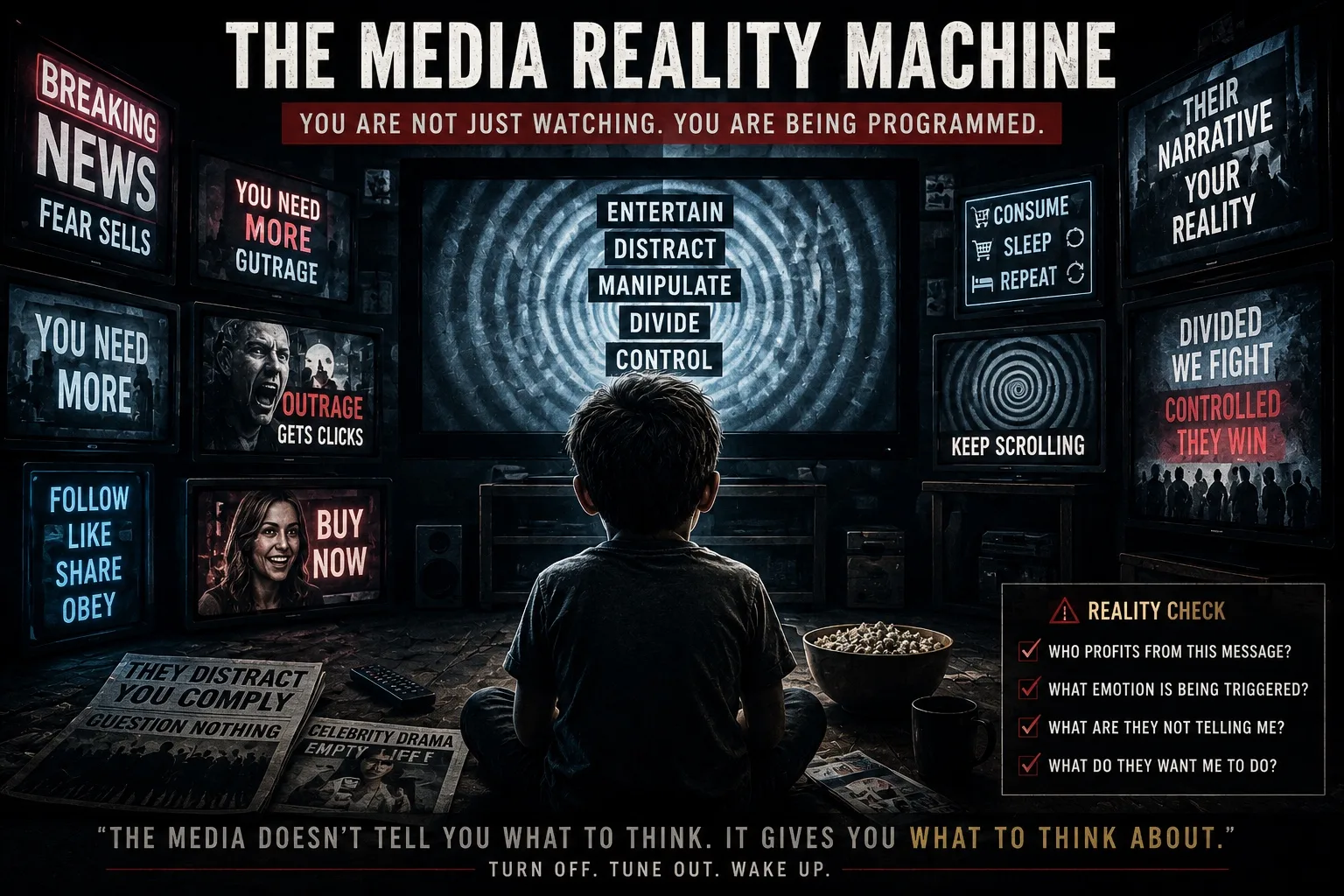
For most of human history, the inside of your head was the one place no one else could enter. That is no longer true in the same way. A pharmaceutical industry is acquiring the rights to ego death. An advertising industry has spent two decades building a behavioral model of you that is better than yours. And the door between them keeps getting wider. This is not about whether psychedelics work. They work. It is about who gets to decide what they mean.
If you have spent any real time at a festival, in a ceremony, or alone with a substance and a question, you already know something the academy is only now publishing papers about. The territory inside is real. It is structured. It can be navigated, mapped, and abused. The question that should make you sit up right now is not whether mainstream culture is finally taking it seriously. It is who is taking it seriously, what they want, and what they plan to charge for the map.
Steelmanning the institutional take
The honest version of the institutional argument runs like this. For sixty years, the cultural backlash against the 1960s drove psychedelic research underground and left millions of people with depression, PTSD, end-of-life anxiety, and addiction without access to compounds that the early research suggested might help. The current “psychedelic renaissance” is, in this telling, a correction. Universities are running rigorous trials. The FDA is creating pathways. Insurance may one day cover treatment that finally addresses root causes instead of managing symptoms. People are getting better. That part is real and worth defending.
The institutional take on the attention economy is similar. Personalized media, targeted advertising, and recommendation algorithms exist because they create value, both for the businesses that deploy them and for the users who get more relevant content. Regulation is catching up. Platforms have introduced screen-time tools, content warnings, and parental controls. The market, given time, will sort it out.
Both arguments are coherent. Both are also doing a particular kind of work, which is to keep the conversation inside a frame that benefits the people defending it.
What the renaissance actually looks like up close
The psychedelic-medicine pipeline as it currently exists is being built by a small number of firms that have moved fast on patent strategy. Compass Pathways holds patents on synthetic psilocybin formulation and elements of the therapy room, including, in earlier filings, the color of the carpet and the use of soft furniture. atai Life Sciences, MindMed, Cybin, and others have built portfolios on minor structural changes to molecules that have been used by indigenous cultures for hundreds or thousands of years. Lykos Therapeutics, formerly the for-profit arm of MAPS, was on track for FDA approval of MDMA-assisted therapy in 2024 before the FDA rejected its application, citing concerns about trial design and therapist conduct.
None of this proves the medicine does not work. The compounds are not the issue. The issue is the architecture being built around them. The trial protocols are owned. The “set and setting” is being trademarked. The therapists are being credentialed by the same firms that hold the patents. When this rolls out at scale, the access path will run through clinics, insurance codes, and prescriptions, and the underground practitioners who have actually carried this knowledge for decades will be relabeled as a public-health risk.
A useful frame: the medicine is being privatized, and the experience around it is being engineered. If you have done this work in a different context, you already understand what is being lost. If you have not, the version you are being sold may be the only version you ever know.
The attention layer
The other front is older and more thoroughly documented. The attention economy was named in 1971 by Herbert Simon: in an information-rich world, the scarce resource is attention. What Simon did not predict was that a generation of engineers would spend their careers learning to extract it on industrial scales.
The mechanics are not hidden. Variable-ratio reinforcement schedules, the same psychology that makes slot machines work, are the foundation of the pull-to-refresh gesture and the notification badge. Tristan Harris and the Center for Humane Technology have spent years documenting how product decisions inside Google, Facebook, and TikTok are explicitly optimized for engagement at the expense of user well-being. Internal Facebook documents, released by Frances Haugen, showed the company knew Instagram was driving teenage depression and anorexia and chose not to act because it would hurt growth metrics.
This is not a story about weak-willed users. It is a story about a multi-billion-dollar engineering effort to defeat your nervous system’s defenses, and the engineering is winning. The average American adult now spends over seven hours a day on screens. The average teenager spends more than nine. A lifespan worth of waking hours is being routed through interfaces designed by people who treat your attention as inventory.
The two fronts connect at a single point. The psychedelic experience, properly understood, is the opposite of the attention economy. It is forced presence. It is the unauthorized renegotiation of your relationship with your own mind. It is, structurally, what the attention economy is built to prevent. The fact that the same era is bringing both forward, one as therapy and one as ambient infrastructure, is not random. It is the same question being asked from two directions: who gets to choose what you pay attention to, and on what terms.
The deeper claim
Here is the part to say plainly. Consciousness is not a thing people understand. The hard problem, the question of why subjective experience exists at all, is genuinely unsolved. Materialist science cannot, as of today, explain why there is anything it is like to be you. This is not a 1WISDOM editorial position. It is the consensus of the field that studies it.
What this means in practice is that any institution that claims authority over consciousness, whether a pharmaceutical company, a regulatory agency, a platform, or a guru, is claiming jurisdiction over something nobody has yet defined. The tools they use are real. The substances are real. The effects are real. But the meaning is not their property, and it never was.
The frame to keep is sovereignty, not refusal. None of this is an argument against medicine, against research, or against using technology. It is an argument for keeping the deed to your interior in your own name.
What you can actually do
- Audit your attention diet for one week. Track which apps you open and for how long. Use Screen Time on iOS or Digital Wellbeing on Android. Do not optimize yet. Just look.
- Remove the algorithm. Replace social media feeds with RSS for a month and notice what changes. Feedly and NetNewsWire are free. You will be shocked at how much of your sense of “what is happening” was being assembled for you.
- Set a real silence practice. Twenty minutes of nothing, no podcast, no audiobook, no music, no input, every day. If you have done psychedelics, this is the muscle that lets the work integrate. If you have not, this is where you find out what your baseline actually sounds like.
- If you work with substances, work with people, not protocols. The medicine is older than the clinical trial. Find lineage. Find community. Be honest about what you are seeking. Pay the people who have carried the practice, not the platforms repackaging it.
- Read the primary sources. Stanislav Grof’s Realms of the Human Unconscious. Aldous Huxley’s Doors of Perception. William James’s Varieties of Religious Experience. The field had thinkers before it had a market.
- Practice consent with your own mind. When you accept a notification, you are answering a question. When you scroll without intent, you are saying yes to whatever shows up next. Re-enter the position of the one being asked.
The frame to keep
You do not need anyone’s permission to take your attention back. You also do not need to wait for an institution to give you a sanctioned version of an experience that has belonged to humans for as long as there have been humans. The medicine is real. The map is older than the firms claiming to own it. The interior is, still, yours.
What is being captured is the public conversation, the supply chain, the language, and the framing. What cannot be captured is the part of you that notices. Train that part. Feed that part. Trust it more than the dashboard.
That is the work. Everything else is commentary.